Hindu intolerance towards Buddhism – Fact vs Myth
"Ancient Hindu texts explicitly command violence, hatred, and social exclusion toward Buddhists, indicating a state of constant religious warfare."
Detailed Investigation
From a historical point of view, the modern distinction between Hinduism and Buddhism is not as sharp as it is today, in fact it was regarded as a secondary way of life (Upa-Dharma) of the Buddhism which was based on the Bauddha Agamas. In the past our forefathers engaged in philosophical debates with each other in the framework of the Darshanas. Modern critics, who have labeled it "religious warfare" or "hatred," did not believe that it was.It was not a war of religion or hatred, as modern critics would describe, but a common history of bitter intellectual debate, sectarian competition, and strict observance of ritual rules (Achara).
1) The Shraddha Exclusions
The Kurma Purana (2.21.32-33), Usana Samita (4.23-30), and Vayu Purana (2.16.24) are cited as examples of Hindu texts that say that there was a special hatred for the Buddhists, due to the fact that their mere presence invalidated the Vedic ritual of Shraddha (ancestor veneration).
A completely different picture emerges when the philological reconstruction of these texts is undertaken. These injunctions are not about social bigotry. Vedic parameters must be considered while conducting a Vedic Shraddha. If a Buddhist is invited (and is one who rejects the Vedas as Pramana, authoritative proof) then the specific mechanics of the rite are invalidated.
Importantly, there is no targeting of Buddhists in these texts. The same verses outright prohibit the followers of the Pancharatra, Kapalika and Pasupata sects – all of which are traditions within Hinduism. Moreover, the Varaha Purana (1.14.5-7) and the Narada Purana (1.28.11-18) make it clear that the Hindu Sanyasis (ascetics) and the professional Hindu Temple Priests (Devalakas) are excluded from Shraddha. For those who are excluded from Vedic Shraddha they maybe conducted using the Agamic methods and we see even Buddhists performing those in Manjushree Parajika and Vajrasattva Parajika.
2) The context of Physical Purity
The Basava Purana is frequently quoted to illustrate an incident in which a devout person became unclean after touching a Buddhist in a dream.
These must be understood in the context of the asceticism of antiquity. The text discusses the extreme physical cleanliness which is necessary for persons that carry the sacred Lingam, and is a sectarian manual of Lingayat Shaivism. It is stated that during the time of the Buddha ordered Shramanas to bathe only once every 15-30 days as recorded in the Pali Vinaya Pitaka. An uncleanliness of other person, required immediate purification for a Hindu ritualist. Even Buddhists had their own internal purity codes; one of the codes that were followed in detail was the Manjushree Parajika, which prescribes elaborate purification procedures for touching people outside of one's caste and relative group.
3) Doctrinal Delusion and the "Mayamoha" Narrative
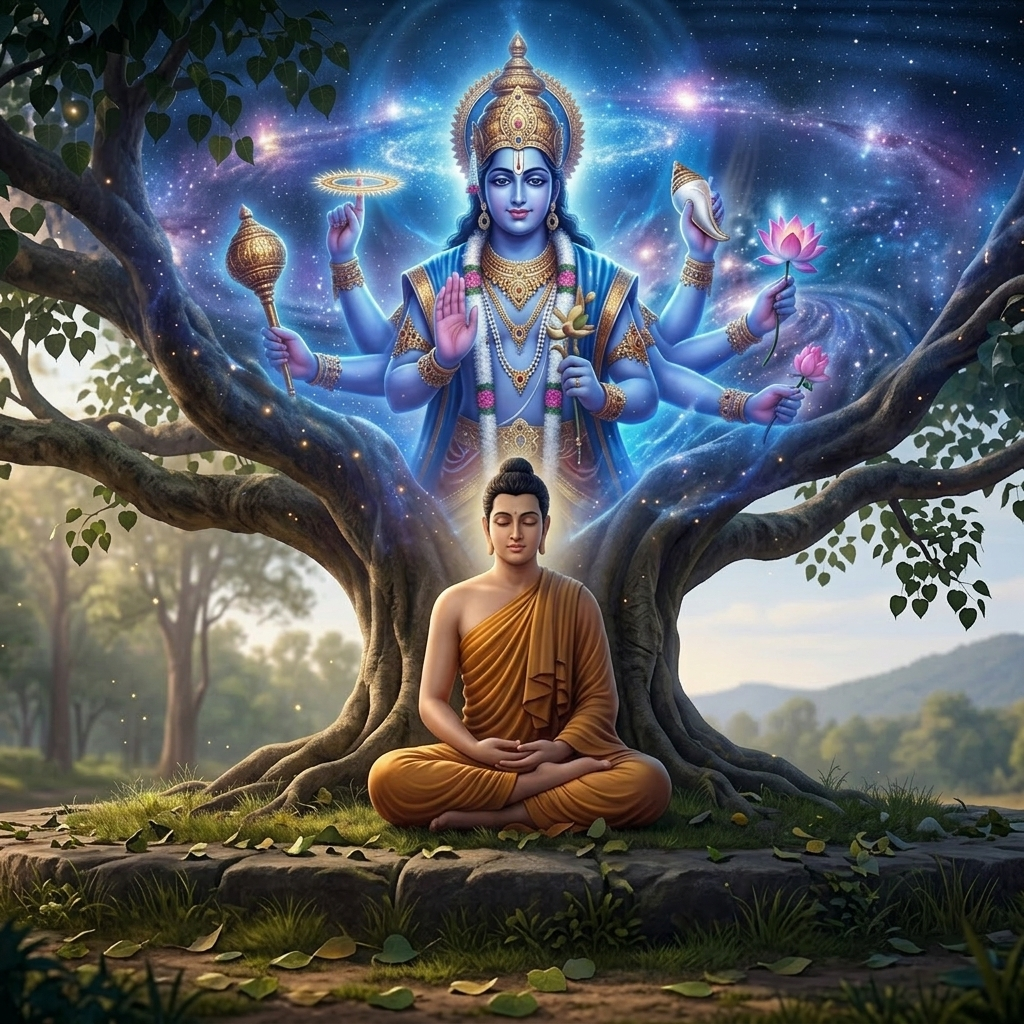
In Padma, Garuda, Vishnu and Agni Puranas, Vishnu appears as Buddha, fools the Asuras (demons) and to remove them from the path of Vedas.
In the Buddhist scriptures, a similar account can be found: Buddha teaches the Asuras and, in texts such as the Mahavastu, the Asuras like Rahu and Vemachitra with the only difference from Hindu Scripture is that they go to heaven instead of hell like in Hindu version. The Hindu version seems imply that Karma of bad deeds of past need to be first endured.
Delusion was a theological tool that was used all over the world. The same word “delusion” is used in the Padma Purana 5.236.1-12 to demean the classical Hindu Vedic schools, such as Jaimini's Mimansa Kanada's Vaisheshika, Gautama's Nyaya, and Kapila's Samkhya.
4) Apocalyptic Violence is a Shared Literary trope
Excerpts from the Kalki Purana that refer to Lord Kalki destroying the Buddhists are often used to assert that Hinduism had a commandment to violence.
These apocalyptic scenarios are typical Kali Yuga tropes geared towards evil conduct, not a call to genocide. The Kalki Purana 13.39-44 denounces those who neglect their Dharmic responsibilities, those who do not honor the ancestors, etc. who worship no devas. The same literary technique was used in Buddhism. The Mahayana Mahaparinirvana Sutra chapter 22 tells of Gautama Buddha's past life as a Bodhisattva, in which he killed off Brahmins who had become icchantikas (spiritually destitute and adharmic) to save them from accumulating more evil kamma. These are not historical military campaigns, but rather metaphysical allegories of the restoration of cosmic order, in both traditions.
5) Discourse of refutation and epistemological disagreement.
According to critics, Adi Shankara was abusive towards the Buddha in his Brahma Sutra Bhashya (2.2.32) in which he alleged that the Buddhist principle "breaks down like a well sunk in sand.
The process is the typical school argument (Purvapaksha and Siddhanta). Buddhist writers such as Bhavaviveka and Dharmakirti criticized Hindu schools for logical flaws in the philosophy. Shankara's critique was purely epistemological and he said similar to critique of Vasheshikas in 2.2.17. In fact, in his Hari Shankara Stotra (Verse 18) Shankara openly extols the Buddha as the all-knowing conqueror of Mara, the merciful and the one who has become the spiritual consciousness.
6) Instances of Shared Veneration
Polemical arguments purposefully ignore the vast textual evidence of mutual respect.
-
The Agni Purana (115.37) actively promotes the veneration of the Mahabodhi Tree as a legitimate path to heaven.
-
The Nilamata Purana (709-714) describes Brahmanas and Shakyas (Buddhists) maintaining excellent relations and collaborating to decorate Chaityas for the Buddha's birth festival.
-
The Padma Purana (5.71.265-268) praises the Buddha Avatar for conquering the world without a weapon and preserving the meaning of the sacred texts.
-
In Yamala Tantras like Rudrayamala Buddha is presented as a Guru of Rishi Vashistha for Chinachara and venerated there.
The historical reality is one of intertwined philosophies, rigorous intellectual debate, and strict ritual boundaries—not a simplistic narrative of unilateral religious persecution.
Sources & References
Agni Purana, Basava Purana, Brahma Sutra Bhashya, Garuda Purana, Hari Shankara Stotra, Kalki Purana, Kurma Purana, Mahavastu, Mahayana Mahaparinirvana Sutra, Manjushree Parajika, Narada Purana, Nilamata Purana, Padma Purana, Pali Vinaya Pitaka, Rudrayamala (Yamala Tantras), Usana Samita, Vajrasattva Parajika, Varaha Purana, Vayu Purana, Vishnu Purana

Sachit Varshney
Advaita Vedantin with a passion for non-dual philosophy, exploring Hindu thought beyond Hindutva, orthodoxy, reformism, or Ambedkarite frameworks. Enthusiast of Sikh and Buddhist texts, weaving insights across traditions with curiosity and depth.

Reader Reflections 0
Join the conversation to share your insights.
Sign In to Reflect